The Yellow Turban Rebellion both a symptom and cause
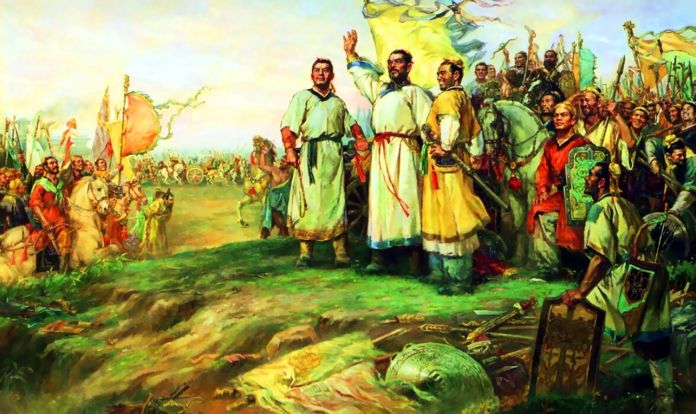
The Yellow Turban Rebellion was a messianic uprising (184–185 c.e.) that was both a symptom and cause of the fall of the Han dynasty (202 b.c.e.–220 c.e.). It occurred during the disastrous reign of Emperor Lin (r. 168–189 c.e.) Ascending the throne at age 12, Lin was under the control of the regent, who sought to eliminate the dominance of corrupt eunuchs with the assistance of the scholar-officials. However, the eunuchs acted first, killed the regent, purged the officials, and proceeded to rule unchecked during the next 20 years. They let landlordism increase unchecked while increasing taxes on the peasants. The economic distress of the population was exacerbated by natural disasters including droughts and flooding of the Yellow River, all producing famine and refugee movements.

Why the color yellow ?
These distresses caused peasant revolts, which combined political discontent with religious overtones. They culminated in 184 c.e. in the Yellow Turban Rebellion. The name was derived from the yellow turban the rebels wore to distinguish themselves from government troops. The rebels had chosen yellow because it symbolized the earth, their logo, which according to Chinese cosmology followed fire, represented by red, the symbol of the Han. The rebels chose signs and symbols to signify cosmic support and religious justification. The rebels were also messianic and millennarian, based on certain interpretations of popular Daoism (Taoism). The Yellow Turbans were led by a man surnamed Zhang (Chang) who taught that the recent plague was caused by sin and could be cured by public confessions, magical and religious practices, and the wearing of amulets and charms. Zhang proclaimed that he could then renew the world and bring about a golden age of Great Peace (taiping). (Great Peace became the name of another major messianic peasant revolt in the 1850s.)

Defeat of the Rebellion
The Yellow Turbans met success in 16 commanderies in northern China but were defeated by 185 c.e., not by the inept regular troops, but by troops raised by powerful provincial commanders. The result was the breakdown of the central government that inaugurated an era during which emperors, all minors after Emperor Lin’s death, were puppets of the regional warlords, while at the capital families of their mothers and grandmothers vied for control.

Fall of the Han dynasty
The first powerful warlord to march on the capital of Luoyang (Loyang) was named Dong Zho (Tung
Cho), who massacred more than 2,000 eunuchs, ending their power, then deposed the young emperor, looted the city, and burned down the imperial library. Dong was soon killed. A new boy emperor was installed, named Xiandi (Hsien-ti), but he was a pathetic plaything of the rival generals. Xiandi’s abdication in 220 was a mere formality that ratified the real power alignment between three major contenders. The Yellow Turban Rebellion contributed to the long decline and fall of the Han dynasty.